
El Block H se inscribe en un contexto urbano donde la relación entre densidad, tipología y espacio público adquiere un papel determinante. El proyecto articula un volumen compacto cuya modulación responde tanto a condicionantes normativos como a una lectura precisa de la trama circundante, estableciendo una continuidad controlada con las alturas y alineaciones preexistentes. La fachada, resuelta mediante un sistema repetitivo de vanos y elementos prefabricados, introduce variaciones sutiles que matizan la percepción del conjunto y regulan la incidencia lumínica en los interiores. La organización en planta evidencia una clara jerarquización de circulaciones y núcleos, optimizando el uso del suelo y favoreciendo la ventilación cruzada. A nivel conceptual, la obra explora la coexistencia entre repetición y singularidad, donde la estandarización constructiva se equilibra con decisiones puntuales que ajustan la escala doméstica al entorno urbano inmediato.
Block H, Kohn Pedersen Fox Associates
Este proyecto, situado en el distrito de negocios de Yongsan, es parte de la comisión a 19 estudios de arquitectura para diseñar los edificios del Plan Maestro Archipielago 21, elaborado por Daniel Libeskind.
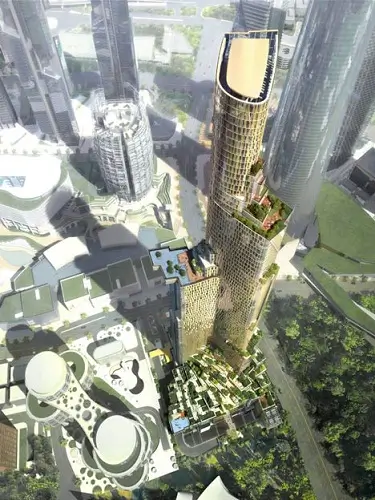
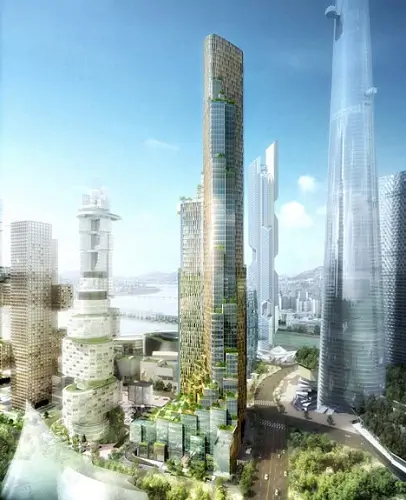
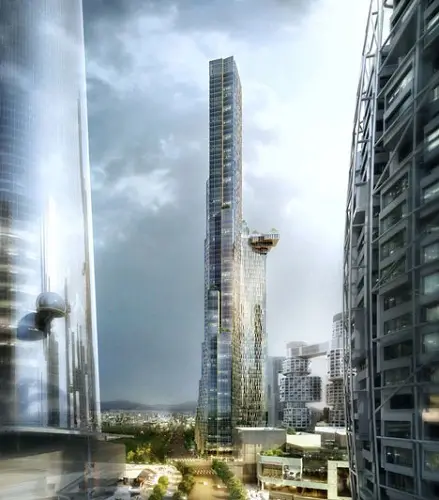
La torre, con una altura de 385 metros, se encuentra en la esquina noreste del distrito de negocios. El diseño del Block H no sigue la típica composición de torre y basamento, sino que surge orgánicamente desde el basamento, formando una unidad integrada. El edificio alberga un hotel de 5 estrellas y un edificio residencial con servicios, característico de esta zona de negocios.
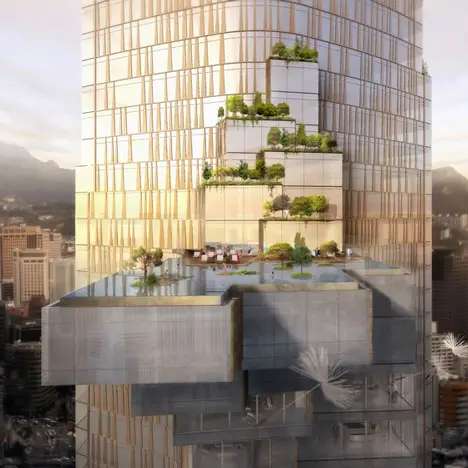
El cuerpo principal de la torre se divide en tres alas, con pisos que se retraen a medida que el edificio se eleva, lo que crea numerosas terrazas y jardines. Este diseño busca mediar entre la gran altura de los edificios de oficinas y la escala más baja de las residencias ubicadas en el lado opuesto.
A nivel de calle, el edificio ofrece un programa variado para intensificar el aspecto social del barrio. Además, incluye un casino, tiendas minoristas, un spa, una gran sala de recepciones y otros servicios para el hotel. Una piscina en voladizo se sitúa en el techo de una de las alas, proporcionando una vista espectacular.
«La lógica detrás de la forma única del diseño radica en la idea de que el edificio está compuesto por apartamentos y habitaciones de hotel que requieren abundante luz natural, vistas espectaculares y máxima privacidad. Estos tres parámetros han dado forma al ADN de la arquitectura. Como un sistema orgánico que busca el equilibrio con la naturaleza, el diseño se expande desde el centro hacia las vistas y la luz en tres ‘alas’ distintas. Nuestro objetivo para este proyecto es establecer y hacer conexiones con la vida en la calle, la nueva ciudad de Yongsan, y con el contexto más amplio de Seúl». Hacemos esto a través de un acercamiento reflexivo al programa, posición y carácter del edificio».
Kohn Pedersen Fox Associates, Block H Memoria del proyecto
La firma internacional de arquitectura Kohn Pedersen Fox Associates (KPF) se complace en presentar su diseño para el Bloque H del Distrito Internacional de Negocios de Yongsan (YIBD) en Seúl. El objetivo del YIBD es crear un nuevo símbolo para la ciudad del siglo XXI; un nuevo centro urbano en Seúl para los negocios internacionales, la vida, el entretenimiento y las compras. El YIBD liderará el mundo en diseño innovador, maximizando el potencial del sitio y aprovechando las conexiones hechas a sus activos urbanos y naturales. El plan maestro, creado por el Studio Daniel Libeskind, es un entorno urbano dinámico que contiene contribuciones de 19 arquitectos diferentes que ejercen en diversos lugares del mundo.
El bloque H consta de un lujoso hotel de 5 estrellas y un edificio residencial con servicios de alta gama que contiene 167.225 metros cuadrados de espacio. La torre de 385 metros de altura se asienta en una parcela de 14.600 metros cuadrados en el límite noreste del YIBD, alcanzando una FAR del 11,4%. El edificio de KPF está situado de manera que busca mediar la altura extrema (665 m) de la emblemática torre de oficinas al noroeste, y hacer la transición de esta altura a la escala más baja de los bloques de viviendas más allá. KPF trató de intensificar el aspecto social de la calle a través de un paisaje urbano distinto y un programa diverso en los niveles inferiores del edificio.
Las tres alas garantizan que los apartamentos residenciales tendrán una vista de esquina importante desde el espacio vital, mientras que maximizan su privacidad desde la unidad adyacente. A diferencia de la mayoría de las torres de gran altura tipo «Y», el diseño «escalona» cada ala asimétricamente de modo que hay un ala baja, una media y una alta. El edificio está cuidadosamente orientado para aumentar las vistas al río Han al sur (ala baja), al parque Yongsan al este (ala media) y al distrito histórico de Nam-San y la torre de referencia adyacente al norte (ala alta).
La torre de KPF contiene funciones de casino, comercio y spa en el sótano, y la empresa propuso un edificio de podio para alojar un gran salón de banquetes y otras comodidades para el hotel. Sin embargo, el deseo no es crear una composición de torre y podio, sino crear una torre que emerja o crezca del podio como el crecimiento orgánico de un cristal. La torre y el podio son tratados como una forma singular, con un lenguaje de terrazas y formas retrógradas que crecen hacia arriba y hacia afuera, hacia la luz y las vistas.
«Como demuestra este nuevo centro urbano futurista, Seúl es una de las principales arenas arquitectónicas innovadoras de Asia, y estamos orgullosos de diseñar el componente de hospitalidad de la misma. Esperamos que logre unir con éxito la red de alta velocidad con los componentes comerciales para vigorizar el plan maestro».
El hotel y las residencias de servicio se expresarán con paletas de materiales diferentes pero interrelacionados. Los elementos sólidos de la fachada se expresarán como un patrón dinámico de superficies no repetitivas que crean un campo en las paredes laterales de la torre y exponen las paredes finales donde se desean las máximas vistas. Estas superficies pasan de la losa de piedra en la base del edificio a las superficies metálicas texturadas en la parte superior del edificio (donde el programa pasa de hotel a residencial), exponiendo sutilmente el programa del edificio. Los materiales naturales como la piedra, el metal y la madera, se utilizan de manera que realzan su carácter. Grandes placas de piedra, tablas de madera y aleaciones reales comprenden tanto las superficies interiores como las exteriores.
Kohn Pedersen Fox Associates
[nggallery id=251]
Kohn Pedersen Fox Associates Bloque H por KPF en el Distrito Internacional de Negocios de Yongsan (YIBD) en Seúl:
- Objetivo del YIBD: Crear un nuevo símbolo y centro urbano para negocios internacionales, vida, entretenimiento y compras en Seúl.
- Bloque H: Consta de un hotel de 5 estrellas y un edificio residencial con servicios de lujo, con 167,225 m2 de espacio total.
- Ubicación y dimensiones: Torre de 385 m de altura en una parcela de 14,600 m2, con una FAS de 11.4%.
- Transición de escala: Busca mediar entre la altura extrema de las torres vecinas y la escala más baja de los bloques residenciales.
- Diseño de planta: Tres alas asimétricas que garantizan vistas de esquina y privacidad para los apartamentos.
- Orientación: Cuidadosamente diseñada para optimizar vistas al río Han, parque Yongsan y distrito histórico.
- Composición de torre y podio: Integrada orgánicamente, con un lenguaje de terrazas y formas que crecen hacia arriba y hacia afuera.
- Materialidad: Emplea materiales naturales como piedra, metal y madera, tanto en interiores como exteriores.
Fotografías: ©Kohn Pedersen Fox
Artículo sugerido: Serie Architects, Singapore Subordinate Courts
TECNNE | Arquitectura, pensamiento crítico y práctica cultural ©Marcelo Gardinetti 2026 – Todos los derechos reservados.
El contenido de este sitio web se encuentra protegido por la legislación vigente en materia de propiedad intelectual e industrial. Salvo en los supuestos expresamente previstos por la ley, queda prohibida su reproducción, distribución, comunicación pública o transformación sin la autorización previa del titular de los derechos correspondientes. Las imágenes y fotografías reproducidas se utilizan exclusivamente con fines informativos, críticos y educativos, en el marco de la divulgación de obras artísticas y arquitectónicas de relevancia cultural. En todos los casos, proceden de fuentes de acceso público en línea, se presentan en baja resolución, carecen de idoneidad para usos comerciales y van acompañadas de la correspondiente mención de autoría, sin que ello implique desconocimiento alguno de los derechos de propiedad intelectual que les son inherentes. Los esquemas y bocetos que acompañan los artículos han sido elaborados por el autor a partir de material fotográfico preexistente, con una finalidad analítica e interpretativa, reconociendo explícitamente la autoría original de las obras representadas y respetando íntegramente los derechos que las protegen. Tecnne emplea herramientas de inteligencia artificial generativa como apoyo en tareas de investigación documental y redacción asistida. Todo contenido es revisado, verificado y editado bajo responsabilidad exclusiva del autor. Ver [política editorial].
